
Introduction
Ask any Maharashtra State Board commerce student what their toughest subject is, and most will say — Accountancy. Yet, ask the toppers what their highest-scoring subject is, and they'll give you the same answer.
That's the paradox of Accountancy. It's hard only if you don't practice. It's one of the most rewarding subjects once you understand the logic behind it.
In this blog, we'll break down Accountancy from scratch — the concepts, the common mistakes, and a proven method to master it for both 11th and 12th Maharashtra State Board.
What Is Accountancy? (And Why Does It Matter?)
Accountancy is the systematic process of recording, classifying, summarising, and interpreting financial transactions of a business. In simple words — it's the language of business.
Every business, from a street vendor to a multinational company, needs accounts to:
- Track income and expenses
- Know profit or loss
- Maintain records for taxation
- Make financial decisions
If you're studying commerce, Accountancy is not just a subject — it's a life skill.
11th Standard Accountancy — What You'll Learn
The 11th Accountancy syllabus introduces you to the foundation:
Key Topics:
- Introduction to Accounting — Meaning, objectives, basic terminology
- Accounting Equation — Assets = Liabilities + Capital
- Journal — Recording transactions with debit/credit rules
- Ledger — Posting journal entries into T-format accounts
- Trial Balance — Checking arithmetical accuracy
- Bank Reconciliation Statement (BRS) — Matching cash book with bank statement
- Final Accounts — Trading A/c, Profit & Loss A/c, Balance Sheet
- Depreciation — Methods of calculating asset value reduction
12th Standard Accountancy — What You'll Learn
12th Accountancy builds on 11th and takes it to an advanced level:
Key Topics:
- Partnership Accounts — Capital accounts, Profit & Loss Appropriation
- Admission of a Partner — Goodwill, revaluation, new profit-sharing
- Retirement & Death of a Partner — Settlement of accounts
- Dissolution of Partnership Firm — Realisation Account
- Company Accounts — Issue of Shares & Debentures
- Analysis of Financial Statements — Ratio Analysis
- Cash Flow Statement — Operating, Investing, Financing activities
The Golden Rules of Accounting (Must Know!)
Every journal entry is based on these three golden rules:
Type of AccountDebitCreditReal AccountWhat comes inWhat goes outPersonal AccountThe receiverThe giverNominal AccountExpenses & LossesIncomes & Gains
Memorise these rules and 80% of your journal problems become easy.
Step-by-Step: How to Write a Journal Entry
Let's say: Purchased goods for cash ₹10,000
Step 1: Identify the accounts involved → Purchases A/c and Cash A/c
Step 2: Apply the Golden Rules:
- Purchases A/c = Nominal → Expense → Debit
- Cash A/c = Real → Goes out → Credit
That's it. Every journal entry follows this same logic.
How to Write a Perfect Balance Sheet
A Balance Sheet shows the financial position of a business on a specific date.
Maharashtra Board Format:
Liabilities₹Assets₹CapitalXXFixed AssetsXXAdd: Net ProfitXXCurrent AssetsXXLess: DrawingsXXCash/BankXXLoansXXDebtorsXXCreditorsXXStockXXTotalXXTotalXX
Always remember: Both sides must match (Balance).
Common Mistakes Students Make in Accountancy
Not writing narration after journal entries — always write the reason in brackets
Skipping working notes — these carry partial marks in board exams
Wrong placement in Balance Sheet — memorise which items go on which side
Not practicing daily — Accountancy needs daily practice, not last-minute cramming
Ignoring BRS — Many students skip Bank Reconciliation and lose easy marks
How to Study Accountancy Effectively
Daily Practice Plan:
- Morning (30 min): Revise theory — definitions, rules, formats
- Evening (1 hour): Solve practical problems — journals, ledgers, final accounts
Weekly Targets:
- Week 1: Journal entries (minimum 30 problems)
- Week 2: Ledger posting and Trial Balance
- Week 3: Final Accounts — Trading, P&L, Balance Sheet
- Week 4: BRS, Depreciation, and revision
Before Exams:
- Solve last 10 years' board papers
- Focus on high-weightage topics — Final Accounts and Partnership
- Practice writing entries FAST — time management is key in board exams
Scoring Strategy for Board Exams
Attempt all questions — don't leave any blank
Show all working notes — even a partially correct answer gets marks
Use proper headings — Trading A/c, P&L A/c, Balance Sheet titles
Draw neat, ruled tables for accounts
Write narrations — examiners specifically check for them
Double-check totals — a single arithmetic error can cost you 4-5 marks
How Rankers Hub Teaches Accountancy
At Rankers Hub, we follow a proven 3-step method for Accountancy:
- Concept First — We teach the logic before the formula
- Practice Daily — Our question banks have 500+ practice problems per chapter
- Mock Tests — Regular timed tests simulate the actual board exam environment
Our students consistently score 90%+ in Accountancy because we treat it as a skill, not just a subject.
Conclusion
Accountancy is not about memorising formulas — it's about understanding the story behind every financial transaction. Once you get the logic, every entry becomes natural. Start with the basics, practice every day, and you'll turn your toughest subject into your highest-scoring one.
Explore Rankers Hub's Accountancy video lectures, practice papers, and mock tests today.
Related Articles
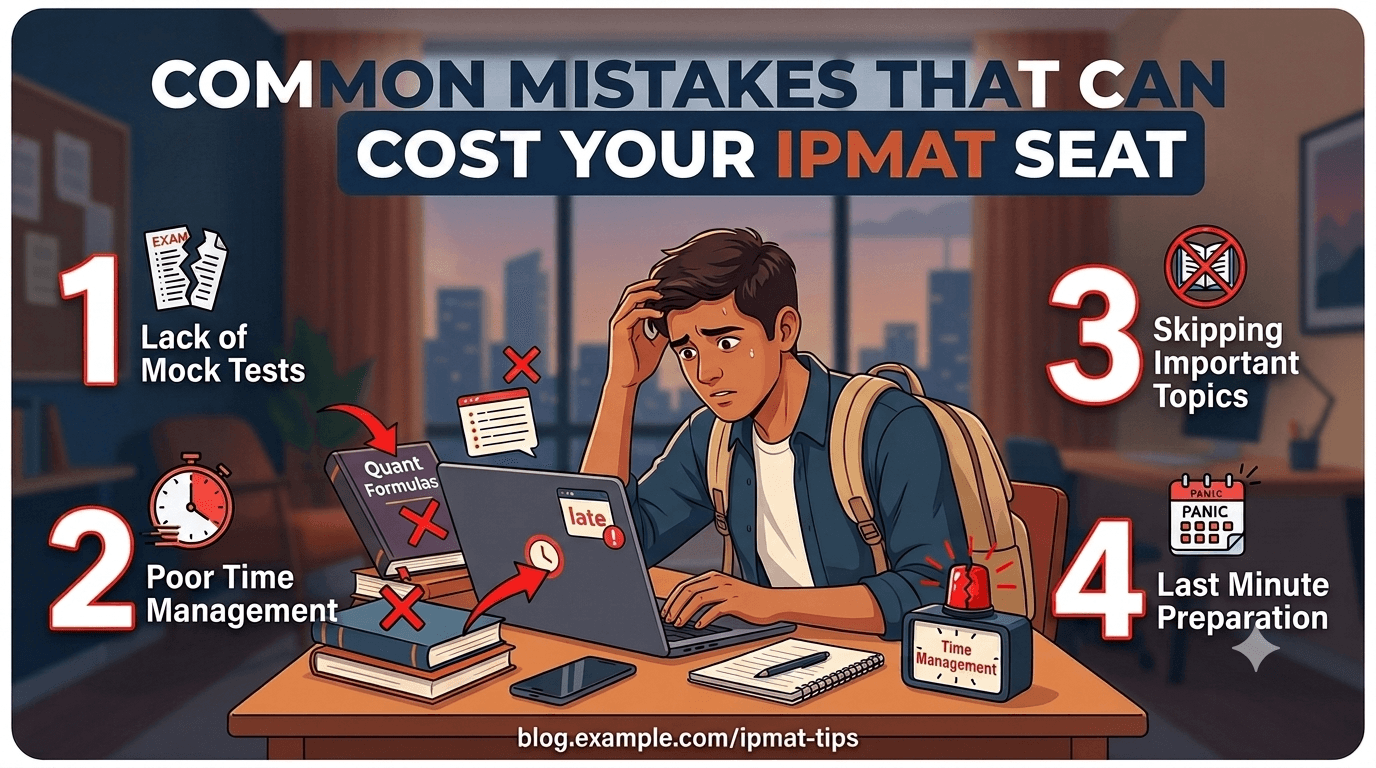
Common Mistakes to Avoid While Preparing for IPMAT 2027
R RANKERS HUB 8 Mistakes to Avoid While Preparing for ...
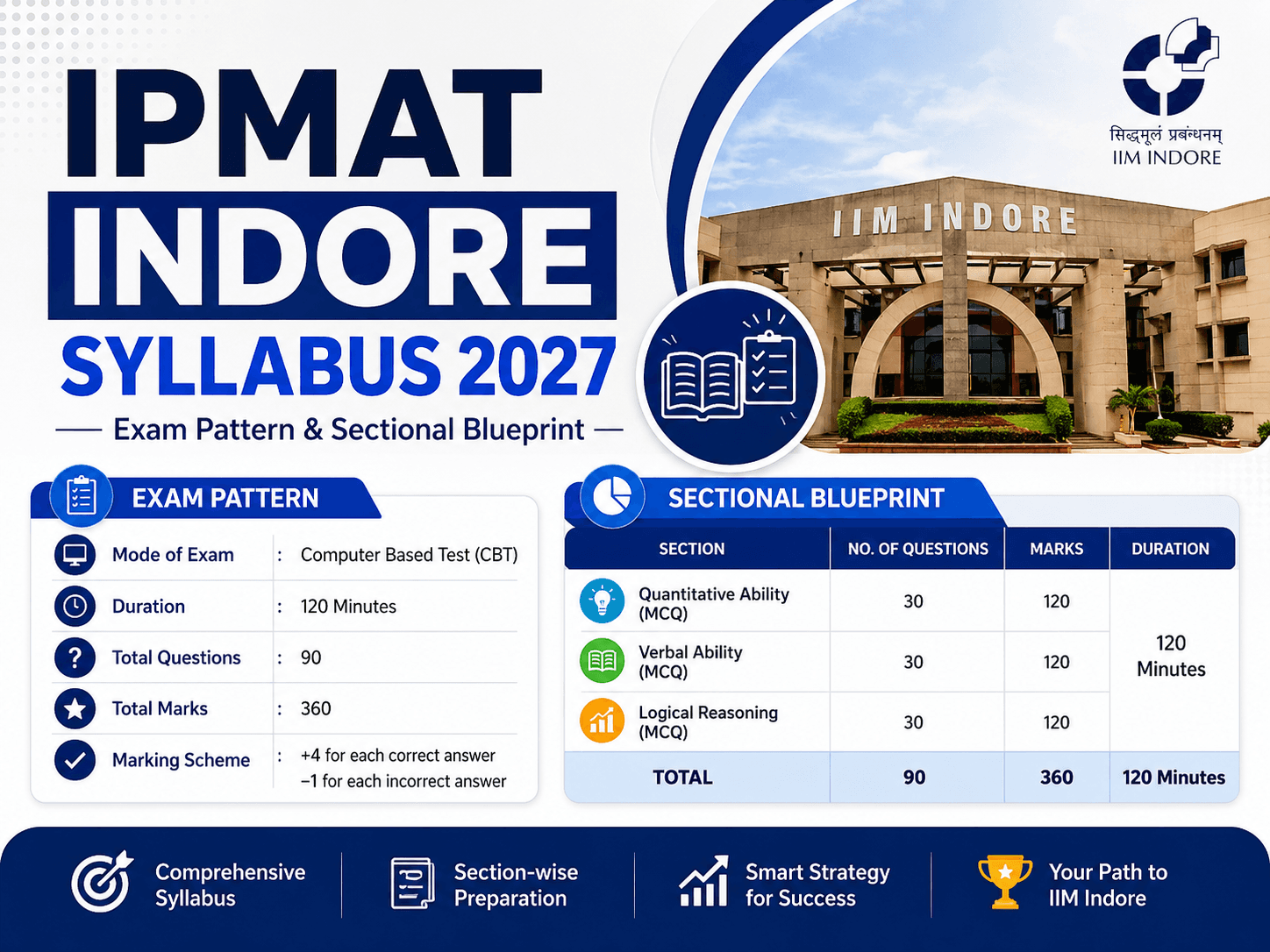
IPMAT Indore Syllabus 2027: Exam Pattern & Sectional Blueprint
IPMAT Indore Syllabus 2027: Exam Pattern & Sectional Blueprint...
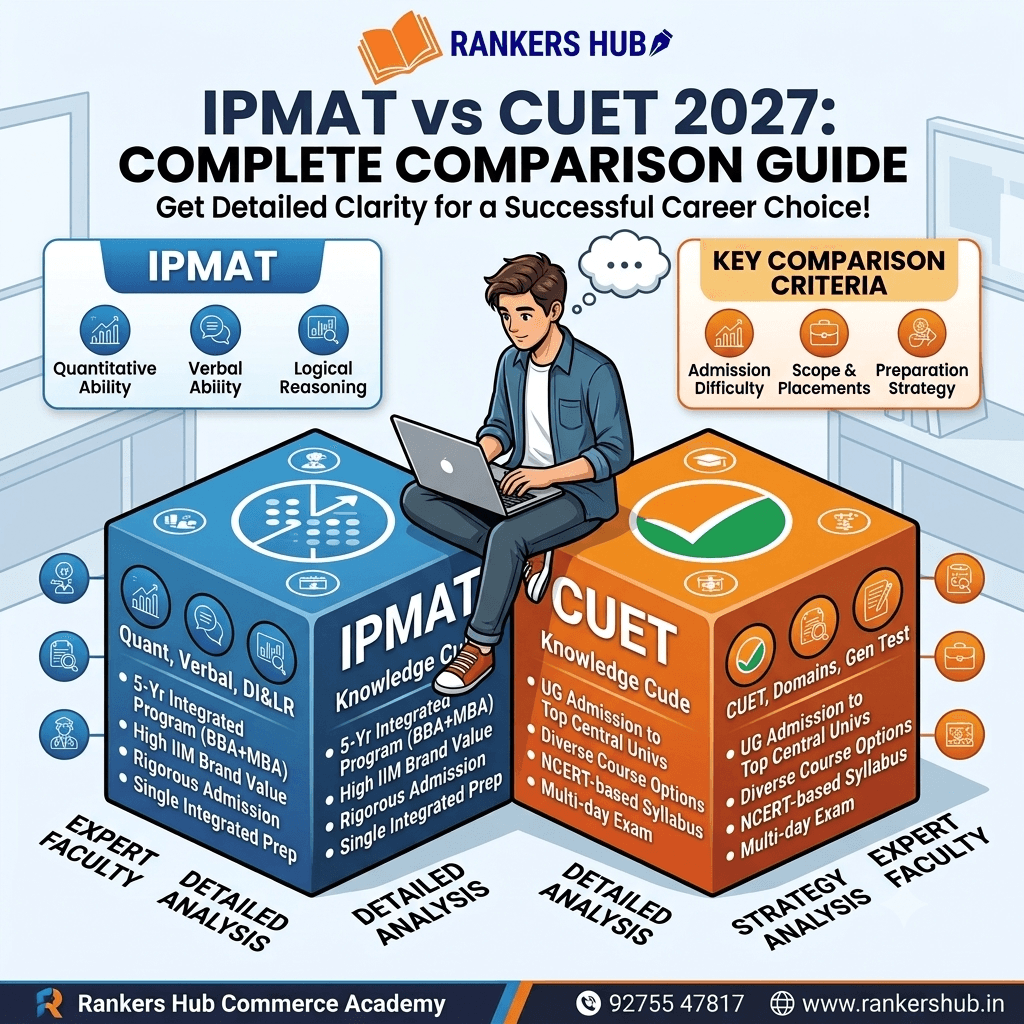
IPMAT vs CUET 2027: Complete Comparison Guide
R RANKERS HUB IPMAT vs CUET 2027: Complete Com...

Accounts is Difficult?
Accounts समजत नाही?Maths practice करूनही clarity येत नाही?हे अनेक students सोबत होतं — कारण basics c...
MAH BBA BCA BMS CET 2027: Complete Preparation Guide, Exam Pattern, Syllabus & Strategy
MAH BBA BCA BMS CET 2027: Complete Preparation Guide Prepare for MAH BBA BCA BMS CET ...

Looking for the best Commerce coaching classes in Pune?
Looking for the best Commerce coaching classes in Pune?Rankers Hub Commerce Academy, Sadashiv Peth o...

Special Batches for Advanced Maths & Accounts
Special Batches for Advanced Maths & Accounts11वी–12वी Commerce साठी advanced level preparation ...
Math weak आहे? Marks वाढत नाहीत?
Math weak आहे? Marks वाढत नाहीत?“गणिताची भीती सोडा… concept समजून घ्या”“Step-by-step learning = full...