
Let's Be Honest for a Second.
You chose Commerce.
Maybe your friends were going to Science, and you thought Commerce would be easier. Maybe someone told you "Commerce mein Maths nahi hota." Or maybe you genuinely love business and wanted to study it.
But then — Day 1 of 11th standard — the teacher opens the Accountancy textbook and writes:
"Debit the receiver. Credit the giver."
And your brain went: "...What?"
Then Maths class happened. Permutations. Combinations. Differentiation.
And suddenly you're thinking — "Did I make a mistake choosing Commerce?"
You didn't. And this blog is going to prove it.
Why Your Brain Feels Confused Right Now (It's Not Your Fault)
Here's something your school doesn't tell you:
Confusion is not a sign that you're bad at something. Confusion is the first sign that your brain is trying to learn something new.
Think about when you first learned to ride a bicycle. You fell. You got confused about balance. You couldn't understand why it kept tipping over. But one day — it just clicked.
Accounts and Maths work the same way.
Right now, your brain is in the "falling off the bicycle" stage. That's completely normal. That's healthy. That's actually required before you can ride.
The students who quit at this stage never get to experience the ride.
"But Seriously — Will Accounts EVER Make Sense to Me?"
Yes. 100%. But only if you understand one thing first:
Accountancy is not a memory subject. It is a logic subject.
Most students fail in Accounts because they try to memorise journal entries. They write "Purchases A/c Dr. To Cash A/c" 20 times hoping it sticks.
It doesn't stick that way.
Here's the real secret — Every single journal entry in the world is just answering 2 questions:
- What is coming INTO the business?
- What is going OUT of the business?
That's it. That's literally all Accounts is.
Let's Prove It Right Now With a Live Example
"Bought goods worth ₹5,000 for cash."
Ask yourself:
- What came IN? → Goods (Purchases) came in → Debit Purchases
- What went OUT? → Cash went out → Credit Cash
Entry: Purchases A/c Dr. ₹5,000 / To Cash A/c ₹5,000
Done. You just wrote a journal entry using pure logic — no memorising.
Now try this yourself: "Sold goods for ₹8,000 cash."
- What came IN? → ________
- What went OUT? → ________
If you figured it out — congratulations. You just proved to yourself that you CAN do Accounts.
"Okay But Maths... I'm Just Bad at Maths."
Stop right there. Read this carefully.
There is no such thing as a person who is "bad at Maths."
There are only people who were taught Maths in a way that didn't work for them. People who gave up too early. People who never had someone break it down simply enough.
And here's the important part — Commerce Maths is NOT Science Maths.
You won't be doing complex trigonometry or coordinate geometry. Commerce Maths is built around real, everyday life situations:
- How does a bank calculate your loan EMI? → That's Maths.
- How does a company find its maximum profit? → That's Differentiation.
- How does a store manager predict next month's sales? → That's Time Series.
You already think in Commerce Maths every single day. You just don't know it yet.
The REAL Reason Students Struggle in Maths
It is not intelligence. It is something called gap accumulation.
Here is what silently happens to most students:
Day 1 — Teacher explains a concept. You're 70% clear but you don't ask because you feel embarrassed.
Day 2 — Teacher builds on Day 1. You're now 50% clear.
Day 5 — You're completely lost. The gap now feels too big to fix.
So you avoid it. You stop trying. You tell yourself "I'm just not a Maths person."
But actually — you just have one small gap that was never filled.
The fix? Go back and find that gap. Fill it. It takes 30 minutes and it changes everything.
Your 3-Step "Confusion Killer" Plan
Step 1: Find Where You Got Lost — Then Go Back
Don't start from today's chapter when you're confused. Ask yourself honestly — "When did this stop making sense to me?" Go back to THAT exact point. Revisit that chapter. Watch a simple explanation online. Fill that gap first, and today's chapter will automatically become clearer.
In Accounts — most confusion traces back to the Golden Rules. If those are shaky, fix them first. Everything in Accountancy flows from those three rules.
Step 2: Study 15 Minutes Every Day — Not 3 Hours on Sunday
This is the biggest mistake students make. They avoid the subject for a week, then sit with it for 3 hours on Sunday and feel terrible.
Your brain learns through small, regular repetition — this is called spaced repetition and it's proven by science. 15 minutes of Accounts problems every day will teach you 10 times more than a 3-hour weekend session.
Think of it like a gym. You don't get fit by going to the gym once for 5 hours. You get fit by going every day for 30 minutes.
Step 3: Celebrate Small Wins — Seriously
When a Balance Sheet balances — feel proud. When you solve an integration problem correctly — tell yourself "I got this."
This is not cheesy. This is brain science.
When you celebrate a small win, your brain releases a chemical called dopamine — the "feel good" chemical. And that dopamine makes your brain want to study more. Small wins literally rewire your brain to enjoy the subject.
Small wins today = Big confidence next month.
What to Do When You're Completely Stuck
When you hit a wall — and every student does at some point — here is the exact plan:
- Read the problem again, slowly. Most of the time the answer is already in the question.
- Write down what you know. Get it out of your head and onto paper.
- Find a similar solved example in your textbook. Study how it was done.
- Close the book and try again yourself. Don't copy — attempt it fresh.
- Still stuck? Ask someone. Your teacher, a friend, or Rankers Hub's doubt sessions. Don't sit with a doubt for more than one day.
The worst thing you can do is let a doubt sit quietly for a week while the chapter keeps moving forward.
A Message to Every Student Who Is Doubting Themselves Right Now
You know what actually separates toppers from average students?
It is not extra intelligence. It is not natural talent.
It is the willingness to sit with confusion just a little bit longer than everyone else.
Toppers don't find Maths easy. They find it uncomfortable — and they stay in that discomfort just 10 more minutes. That's the moment the breakthrough happens.
Every Commerce topper you admire was once sitting exactly where you are right now — confused, frustrated, wondering if they'd ever get it.
They got it. You will too.
You are not behind. You are not broken. You are in the uncomfortable phase that every successful Commerce student has been through. Stay in it a little longer.
How Rankers Hub Helps You Break Through Confusion
At Rankers Hub, we designed our entire teaching method around the fact that confusion is normal:
- Concept-first teaching — We explain the why before the how, always
- Real-life examples — Every topic connected to something you already understand
- Daily bite-sized practice — Small doses that build big habits
- Live doubt sessions — Ask anything without judgment
- Simple language — No heavy jargon, no complicated explanations
We have helped thousands of Maharashtra State Board students go from confused and scared to confident and scoring 85%+.
Conclusion
Accounts and Maths are not your enemies. They are just unfamiliar roads that feel scary because you haven't walked them enough yet.
Give it time. Give it small daily effort. Give yourself a chance.
And one day — very soon — you'll be the one in class who explains journal entries to your confused classmates. That day is closer than you think.
Visit Rankers Hub — because confusion is just confidence waiting to happen.
Related Articles
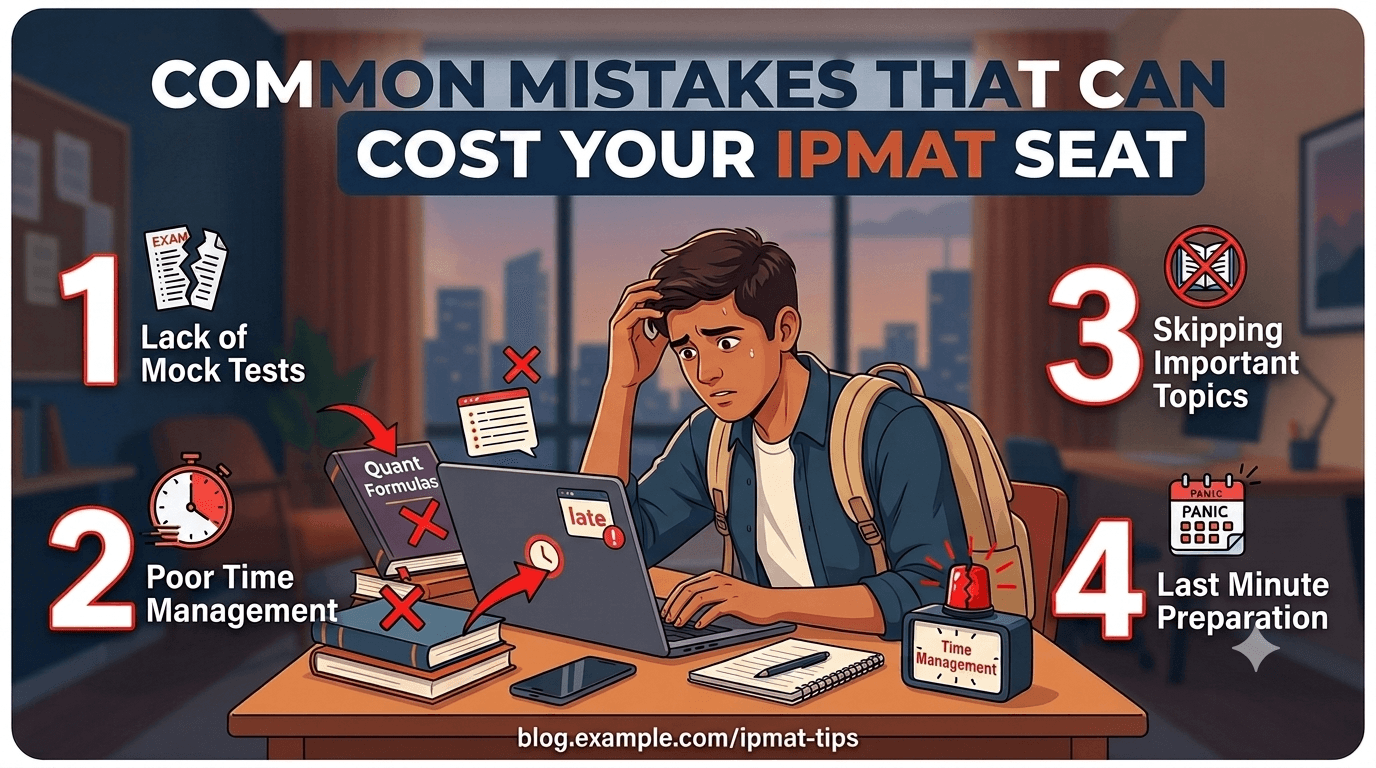
Common Mistakes to Avoid While Preparing for IPMAT 2027
R RANKERS HUB 8 Mistakes to Avoid While Preparing for ...

IPMAT Indore Syllabus 2027: Exam Pattern & Sectional Blueprint
IPMAT Indore Syllabus 2027: Exam Pattern & Sectional Blueprint...
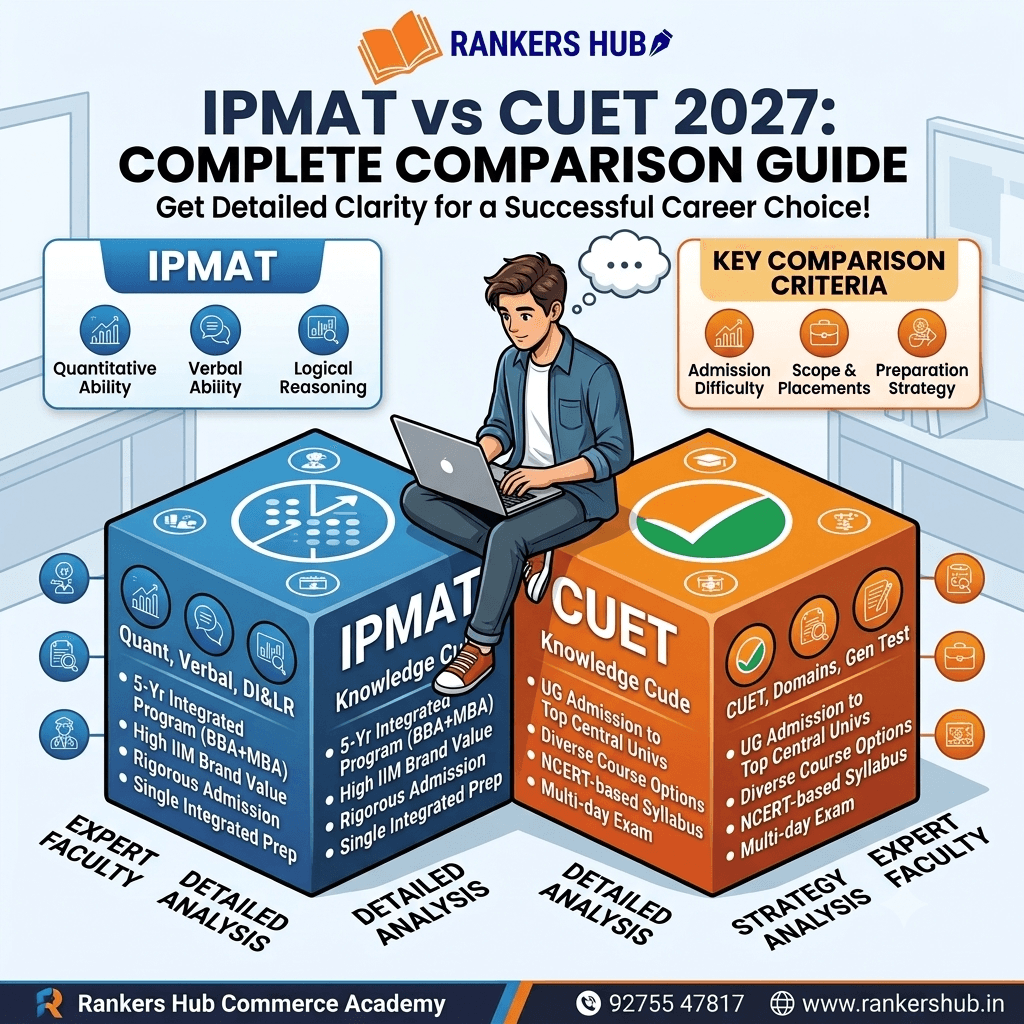
IPMAT vs CUET 2027: Complete Comparison Guide
R RANKERS HUB IPMAT vs CUET 2027: Complete Com...

Accounts is Difficult?
Accounts समजत नाही?Maths practice करूनही clarity येत नाही?हे अनेक students सोबत होतं — कारण basics c...
MAH BBA BCA BMS CET 2027: Complete Preparation Guide, Exam Pattern, Syllabus & Strategy
MAH BBA BCA BMS CET 2027: Complete Preparation Guide Prepare for MAH BBA BCA BMS CET ...

Looking for the best Commerce coaching classes in Pune?
Looking for the best Commerce coaching classes in Pune?Rankers Hub Commerce Academy, Sadashiv Peth o...

Special Batches for Advanced Maths & Accounts
Special Batches for Advanced Maths & Accounts11वी–12वी Commerce साठी advanced level preparation ...

Math weak आहे? Marks वाढत नाहीत?
Math weak आहे? Marks वाढत नाहीत?“गणिताची भीती सोडा… concept समजून घ्या”“Step-by-step learning = full...